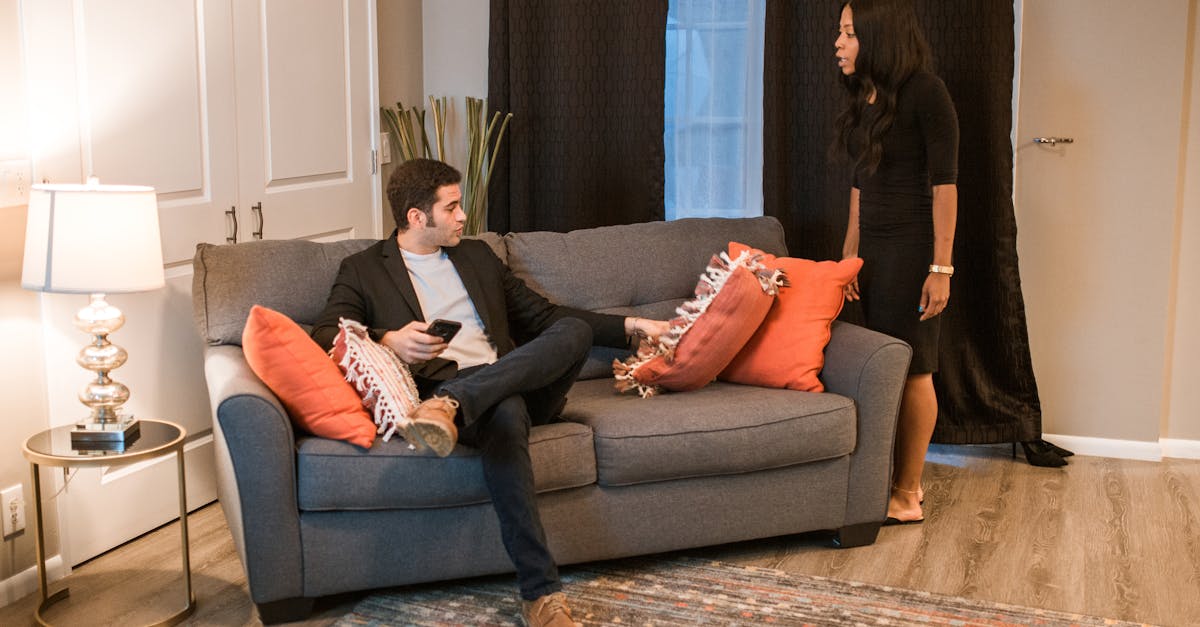
You're sitting next to your partner on the couch, laptop open, waiting for the session to start. One of you is scrolling. The other one is pretending to. Neither of you knows what to say first.
Most couples come into the first session braced for something hard. They think we're going to ask them to recreate their worst fight, or pick sides, or assign blame. That's not what happens. The first session is mostly us listening, asking specific questions, and giving you a sense of what the work will actually involve.
There's one question we ask early on that changes what most couples end up working on. It isn't "what's wrong" and it isn't about communication. We'll get to it.
What we do in the first session
Here's the rough shape of a first couples session, so nothing catches you off guard.
We start with logistics and orientation. We explain how we work, how confidentiality functions when there are two of you in the room, and what the goal of the first session is. The goal isn't to fix anything. It's to understand what's going on and figure out if we're the right fit.
Then we move into the story. We ask each of you, separately and then together, what brought you in. Not just the surface answer ("we fight a lot") but the version underneath. When did things start feeling off? What does a hard week look like? What does a good week look like? Most of the first session is us asking questions and listening.
We close with direction. We tell you what we noticed, what we think the core pattern might be, and what working together would look like for the next few sessions. You'll leave with at least one concrete thing to try before the next session.
- Couples therapy
- A structured kind of therapy where both partners meet with the same therapist to work on the relationship itself, not just each person's individual issues. The work focuses on communication patterns, conflict, trust, and connection.
You won't leave with everything resolved. You shouldn't. Anyone who promises that in one session is selling something.
The question that changes everything
Early in the first session, we ask both partners a version of this: what do you wish your partner understood about you that they don't?
Not "what is your partner doing wrong." Not "what do you want to change." What do you wish they got about you.
The answers almost never sound like a complaint. They sound like grief. "I wish he understood that when I shut down, I'm not punishing him, I'm overwhelmed." "I wish she knew how hard I'm trying." "I wish he saw that I'm exhausted, not uninterested."
Once both partners say their answer out loud, the room shifts. The fight you came in with is usually not the real fight. The real fight is two people who feel unseen by the person they most want to be seen by.
That number surprises most couples. The goal isn't to eliminate conflict. It's to change how you move through it.
What we ask that other therapists skip
There's a set of questions we ask in the first session that aren't about your relationship at all. Couples sometimes look puzzled when we get to them.
- Sleep: how each of you is sleeping, separately. Bad sleep makes everything in a relationship harder, and it's usually invisible until someone asks.
- Individual mental health history: anxiety, depression, ADHD, trauma, OCD. These don't cause relationship problems, but they shape how each of you shows up in conflict. If one partner has untreated anxiety and the other has ADHD-related emotional dysregulation, the same fight can repeat for years until both pieces are named.
- What your families of origin did with conflict: not to blame your parents, but because most of us argue the way we were taught to argue at age 10, even if we hated it then.
- What's good: we always ask what's working, what you like about each other, what you used to do for fun. Couples who only talk about what's broken forget they're still standing on something.
If we don't ask about these things in the first session, ask us. They matter more than the surface conflict almost every time.
What you'll probably feel afterward
Most couples report one of three things after the first session.
The most common one is relief. You said the thing out loud that you've been carrying around for months, and the world didn't end. Your partner heard you say it, sometimes for the first time. Sometimes that alone shifts the temperature at home for a few days.
The second is exhaustion. Talking honestly after weeks or months of not talking honestly is tiring. Plan something low-key after the session. Don't schedule something demanding right afterward.
The third, and this one catches people off guard, is sadness. Some couples leave the first session and feel a wave of grief about how long things have been hard. That's not a bad sign. It usually means you finally let yourself feel something you'd been holding off.
If you feel worse for a couple of days, that's normal too. We tell couples this in the first session so it doesn't surprise them. The work stirs things up before it settles them.
For a broader picture of how couples work fits together over time, our online couples therapy in California guide walks through what the next several sessions tend to look like.
What to do before your first session
A few practical things help.
- Talk to your partner about logistics, not content: decide where each of you will sit, whether you'll be on one device or two, and what you'll do for privacy if you have kids or roommates. Don't pre-discuss what you'll say. Bring it raw.
- Write down one thing you want the therapist to know: not a list. One thing. If you forget everything else, that's the one we'll start with.
- Eat something: hungry plus emotional is a bad combination.
- Leave a buffer afterward: don't schedule the session right before a meeting. Give yourself room on the other end.
If you're still deciding whether now is the right time, we wrote about that in when to consider couples therapy.
You can learn more about how we work on our couples therapy page, or book a free 15-minute consultation and we'll talk about what's going on and whether we're a good fit.
The first session isn't the hard part. The hard part was deciding to book it. You already did that.