Online OCD therapy in California

The intrusive thoughts won't stop. The rituals take hours. You know it doesn't make sense, but you can't just quit.
We get it. We treat OCD with Exposure and Response Prevention (ERP), the approach that works for about 70% of people who try it.
What is the best therapy approach for OCD?
Short version first, then the page goes deeper.
OCD is commonly treated with Exposure and Response Prevention (ERP), a specialized form of CBT that helps you face triggers gradually without doing compulsions afterward.
- Treatment approach: ERP with symptom tracking using the Y-BOCS
- Best fit: intrusive thoughts, checking, contamination fears, rituals, and avoidance
- Access: secure online sessions anywhere in California
- Cost: insurance accepted or $125 private pay per session
What OCD actually feels like
A thought gets stuck. Maybe it's about contamination, harm, or something you can't even say out loud. You know it doesn't make logical sense. But you do the ritual anyway because the anxiety is unbearable if you don't.
That's OCD. About 2.5 million adults in the US have it. It isn't a personality quirk or a preference for neatness. It's a real condition, and it responds well to treatment.
The goal is not to shame the ritual away. The goal is to help your brain learn that you can feel the anxiety and still not obey it.
OCD often involves
- Intrusive thoughts that feel urgent or frightening
- Compulsions or rituals that temporarily lower anxiety
- Avoiding people, places, or situations that trigger obsessions
- Knowing something is unlikely but feeling unable to stop checking
How we treat OCD
We use Exposure and Response Prevention (ERP). That's a specific type of CBT built for OCD. You and your therapist identify the situations, thoughts, or images that trigger obsessions, then practice facing those triggers without doing the compulsion afterward.
We're not trying to eliminate intrusive thoughts. Everyone has those. The goal is to change your relationship with them so they don't run your day anymore. With repeated practice, the anxiety weakens on its own.
Sessions happen over secure video from anywhere in California. We accept insurance, and you'd usually pay your plan's copay. If you're not using insurance, private pay is $125 per session. We accept Aetna, Anthem Blue Cross, Blue Cross, Blue Shield, Carelon Behavioral Health, and CIGNA.
What ERP actually looks like
- We map your obsessions, compulsions, and avoidance patterns
- You rank triggering situations from least to most distressing
- You practice gradual exposures with your therapist's support
- We track progress with the Y-BOCS so change is visible
Licensed, ERP-focused OCD care
A quick skim of what matters before someone decides to reach out: license, method, access, and cost clarity.
Licensed California therapist
Sessions are provided by a therapist licensed to work with clients located in California.
OCD-specific treatment
The page clearly names ERP as the treatment approach and explains how exposures are paced.
Measurement-based check-ins
The page explains how Y-BOCS tracking can help measure OCD symptoms over time.
Clear cost context
The page states insurance acceptance, copay variability, and private-pay pricing.
Source notes on this page
- The page references Foa et al. on ERP outcomes for OCD.
- Treatment language explains exposure and response prevention without promising a guaranteed result.
- FAQ content clarifies that exposure work is collaborative and not forced.
Not sure where to start?
Request a free 15-minute consultation. We'll talk about what you're dealing with and whether we're a good fit.
Request a free 15-minute consultation→No cost. No pressure. We'll reply within one business day.
How it works
ERP has a clear structure. You move at a pace you can actually tolerate.
We get the full picture
Your therapist learns about your obsessions, compulsions, and how OCD shows up in your day. We use the Y-BOCS to measure where symptoms are now.
You build the map
You and your therapist rank triggering situations from least to most distressing. This list guides treatment, and you decide what goes on it.
Gradual exposures
Starting with lower-anxiety items, you practice facing triggers in a structured way. Your therapist is with you through the process.
Response prevention
After each exposure, you practice not doing the compulsion. Over time, the urge gets quieter and your day gets less controlled by OCD.
Who you'll work with
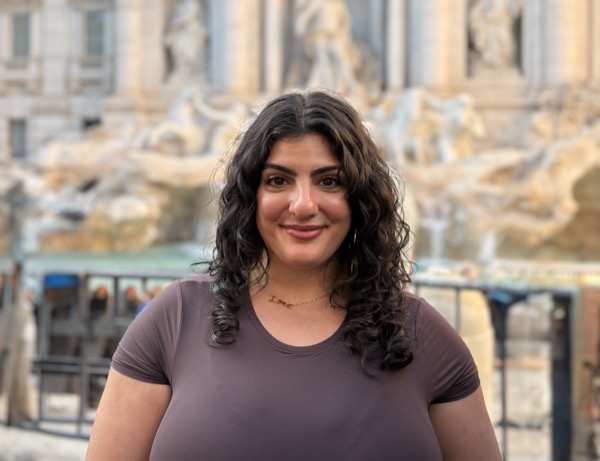
Leona Esmaeily-Aimua
LMFT #142467
Leona works with OCD, anxiety, depression, and ADHD. She combines person-centered therapy with CBT, which means she keeps the work practical while still paying attention to the fear, shame, and exhaustion underneath the symptoms.
OCD therapy FAQ
It's a specific type of CBT built for OCD. You and your therapist gradually face the situations that trigger your obsessive thoughts, then you practice not doing the compulsion afterward. The anxiety fades on its own over time. About 70% of people with OCD get better with ERP (Foa et al., 2005).
Yes. Studies show video-based ERP works just as well as in-person. You meet your therapist over secure video from anywhere in California. Same session structure, same exposures, same progress tracking.
Most people do 12 to 20 sessions. Some notice fewer compulsions within the first few weeks. We track your symptoms with a validated scale called the Y-BOCS at regular intervals, so you see your progress in real numbers.
No. You and your therapist build a list of triggering situations together, ranked from mildly uncomfortable to most distressing. You start at the bottom and move up at your own pace. Nothing happens without your say-so.
You don't have to keep doing this alone.
Request a free consultation. We'll talk about what you're going through and whether ERP is the right fit.
Request a free 15-minute consultationNo pressure. No commitment. Just a conversation.