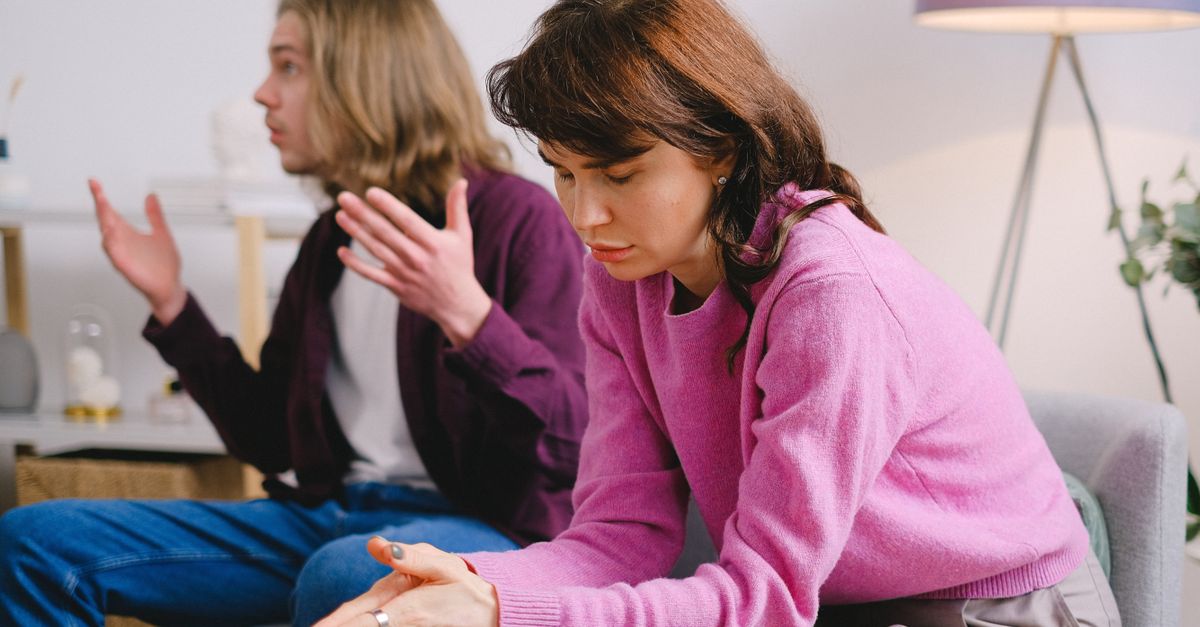
The texts that start out normal and end with "wait, are you mad at me?" The plans that get canceled an hour before. The nights they're quiet and you can't tell if it's you, work, or something they can't name yet.
Dating someone with anxiety doesn't look dramatic from the outside. It looks like a lot of small moments where you're not sure what the right move is. You want to be a good partner. You also want to stop walking on eggshells.
Here's the thing most relationship advice gets wrong: there's one move partners make that feels loving in the moment and makes anxiety worse over months. We'll get to it. First, what you're actually dealing with.
What anxiety looks like from the outside
Anxiety isn't just worry. It's a nervous system that's learned to scan for threat even when nothing is wrong. From the inside, your partner feels tight, braced, and tired. From the outside, you see the behaviors that come out of that: the overthinking, the reassurance-seeking, the sudden shutdowns, the "I'm fine" that isn't.
So if you're dating someone with anxiety, you're not unlucky. You're part of a very large group of people trying to figure out the same thing.
- Reassurance-seeking
- A pattern where someone with anxiety asks the same question in different ways ("Are you sure you're not mad?" "Are we okay?") to try to turn down the uncertainty their nervous system can't tolerate. It calms things down for a few minutes, then the loop starts again.
The behaviors can look like personality traits, but they usually aren't. They're coping. Your partner isn't being needy on purpose. Their brain has decided that checking is safer than not checking. That's useful context, because it changes what helps.
A few patterns we see constantly in sessions:
- Pre-event spiral: hours or days of worry before something small, like a dinner or a work call, then relief after it's over.
- Post-conversation replay: going back through what they said, what you said, what their coworker said, looking for signs something is off.
- Avoidance that looks like preference: "I just don't like parties" sometimes means "parties flood my system and I don't know how to say that."
- Body stuff: shallow breathing, stomach issues, trouble sleeping, tension headaches. The nervous system has to put the stress somewhere.
If a lot of this sounds familiar, you might also want to read our piece on when worry becomes a problem for a clearer picture of what your partner is probably experiencing.
What actually helps your partner
Most of what feels intuitive, like reassuring them harder, pushing them to just do the thing, or giving them endless space, misses what their nervous system actually needs. Here's what tends to work.
Name the feeling, not the content. When they're spiraling about whether their boss is mad, don't argue with the evidence. Try, "Your brain is doing the thing where everything feels urgent. That sounds exhausting." You're acknowledging the state, not debating the story. That's what calms a nervous system.
Lower the stakes of hard conversations. Anxious partners often brace for a fight before you've said anything. Starting with "This isn't a big deal, I just want to tell you about my day" takes 90% of the activation out of the room. It sounds obvious. Most people skip it.
Be a predictable presence, not a perfect one. You don't have to be endlessly patient or always available. You do need to be consistent. Saying "I need twenty minutes, then I want to hear about it" and actually coming back in twenty minutes does more for anxiety than any amount of reassurance.
Help them notice what works. Most anxious people are experts in what's wrong and amateurs at what helps. If walks, sleep, less caffeine, or therapy sessions clearly make a difference, say so out loud. "You've seemed lighter since you started going twice a month" is the kind of thing people miss about themselves.
In our sessions with couples, the shift that changes things fastest isn't a new communication script. It's the moment the non-anxious partner stops treating the anxiety like a problem to solve and starts treating it like weather they can read.
That matters because it means anxiety isn't a fixed trait. If your partner gets real treatment, there's a strong chance things get meaningfully better. You don't have to brace for this version of the relationship forever.
What quietly makes it worse
This is the part most articles skip. There are things loving partners do, every day, that keep anxiety stuck. Not because you're doing anything wrong, but because what feels supportive and what's actually helpful aren't always the same thing.
Over-reassuring. Here's the move we promised at the top. When your partner asks "Are you sure you're not mad?" for the fifth time, the loving thing feels like saying "Yes, I promise, I'm not mad" again. But every time you answer, you teach their nervous system that it needed the reassurance to be okay. The anxiety gets a little louder next time, not quieter. A better response: "I already told you I'm not. I think your anxiety is asking, not you." Said warmly, not sharply.
Taking over avoidance. Canceling plans for them. Making phone calls they're dreading. Running interference with their family. In the moment, it's a gift. Over time, it shrinks the list of things their system believes they can handle. The world gets smaller, and so does the relationship.
Mind-reading on their behalf. "I didn't tell you about the party because I knew you'd be anxious." Decisions made for them, based on your prediction of their anxiety, usually backfire. They either feel managed or they lose track of what they actually can do. Ask instead of guessing.
Absorbing their state as feedback about you. When they're quiet and tense, it's rarely about you. If you take every mood as a referendum on the relationship, you'll end up anxious too, and now you have two activated nervous systems and no one steering. A lot of couples get stuck in the same argument on repeat exactly here.
Never saying what's hard for you. Partners of anxious people often go quiet about their own needs because "they have enough going on." That builds resentment, and resentment is corrosive. Your partner would rather know that bedtime feels lonely than find out six months later that you've been pulling away.
The theme across all of these: short-term kindness that trains long-term stuckness. You can be warm and still not do them.
When to think about therapy together
Some couples can work on this with a few honest conversations and a book. Many can't, and that's not a failure. Anxiety is a nervous system pattern. It usually responds best to actual treatment.
A few signals it's time to bring in help:
- You're having the same conversation on loop. The reassurance cycle, the "did I upset you" cycle, the canceled-plans cycle. If you've named it and it still happens weekly, it's not going to resolve on its own.
- One of you is quietly burning out. If you're the non-anxious partner and you feel more like a therapist than a partner, that's data. If you're the anxious partner and you feel like a burden, that's data too.
- Sex, closeness, or fun are shrinking. Anxiety eats into the parts of a relationship that need play. When the fun goes first, it usually doesn't come back without help.
- You're starting to wonder if you're the problem. You're not. But that question is a sign the pattern has been running too long without a counterweight.
Often the right starting point is individual therapy for the anxious partner plus couples work on the pattern between you. Sometimes it's one or the other. We talk through this in when to consider couples therapy if you want a longer look.
If you're not sure where to start, that's what the consultation is for. We can tell you honestly whether couples therapy makes sense for what you're dealing with, or whether individual work would do more. You can request a free 15-minute consultation and we'll go from there.
You don't have to figure out which kind of help you need before you ask for help. That's our job.