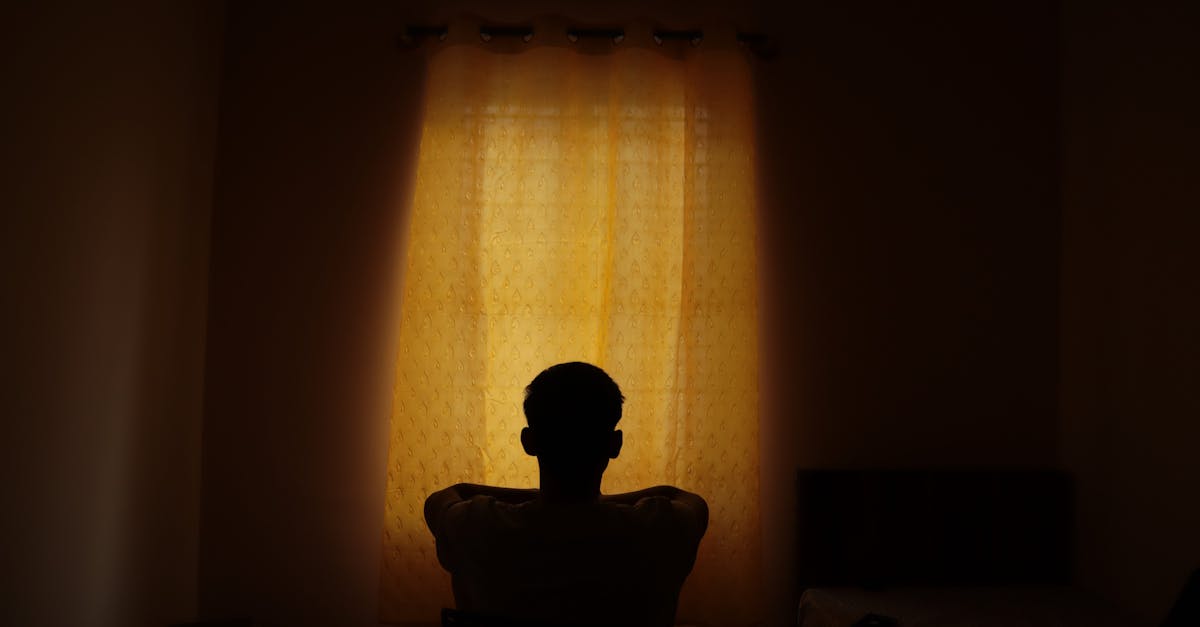
It doesn't always look like sadness
Here's what surprises most people: you can be depressed and feel almost no sadness at all. That's one of the main reasons depression goes unrecognized for months, sometimes years.
One symptom almost every client describes first has nothing to do with crying. We'll get to it below.
You wake up and the alarm goes off and you just... lie there. Not because you're tired, exactly. Because nothing on the other side of getting up feels worth the effort.
You used to like cooking. Now you eat cereal at 9 p.m. or skip dinner entirely. You used to text people back. Now your phone sits face-down on the counter with 14 unread messages.
It's not that you're crying all the time. Some days you feel nothing at all. Flat. Like someone turned the volume down on everything.
The things that used to matter don't anymore, and you can't pinpoint when that changed.
That flatness is what depression often feels like from the inside. Not dramatic. Not cinematic. Just heavy, quiet, and hard to explain.
What sadness looks like
Here's what normal sadness actually looks like, and why it's different from what you might be dealing with.
Sadness is a normal response to hard things. You lose someone. A relationship ends. You get passed over for a job you wanted. Your dog dies.
You feel terrible, and you should. That feeling means something.
Normal sadness has a shape. It spikes, it hurts, then over days or weeks it softens. You might cry on Tuesday and laugh at a dumb video on Thursday. The sadness sits alongside other feelings. It doesn't replace them.
You can still function. You still go to work. You still eat. You still call your friend back, even if it takes a day longer than usual. The world feels harder, but it doesn't feel pointless.
Grief follows a similar pattern. It's heavier than everyday sadness and lasts longer, but it still moves. It still shifts. There are bad hours and less-bad hours.
Sadness passes. That's the single biggest difference.
What depression looks like
Here's how depression actually shows up day to day, and what separates it from a rough stretch.
Depression doesn't pass on its own. It settles in.
- Clinical Depression
Major Depressive Disorder (MDD) is a medical condition where low mood, loss of interest, or both persist for at least two weeks and affect your ability to function in daily life. It's not a character flaw or something you can snap out of. It involves real changes in brain chemistry and requires treatment.
What we see most often is clients who've been functioning on autopilot for months before they reach out. They've convinced themselves it's stress, or burnout, or just a bad season.
By the time we're sitting together in a session, they've usually been carrying this for six months or longer. The two-week clinical threshold is the floor, not the average.
Signs of depression that don't look like sadness
Here's what it actually looks like, translated from the diagnostic criteria into plain language:
You've lost interest in things you used to care about. Not one thing. Most things. Hobbies, friends, sex, food, work. The stuff that used to give you a spark just doesn't anymore.
Your mood is low most of the day, nearly every day. Not a bad afternoon. Not a rough Monday. A baseline heaviness that's there when you wake up and still there when you go to bed.
Your sleep is off. Either you can't fall asleep, or you can't stop sleeping. Sometimes both in the same week.
You're tired all the time. Even after a full night of sleep. Getting through a normal day feels like walking through water.
You can't concentrate. Reading a page takes four tries. You stare at your inbox for 20 minutes without opening anything. Decisions that used to be automatic (what to eat, what to wear) feel overwhelming.
You feel worthless or guilty in ways that don't match reality. You made a small mistake at work and you're convinced everyone hates you. You forgot to reply to a text and you spiral into "I'm a terrible person."
You think about death. Not always actively. Sometimes it's a passive thought: "It wouldn't matter if I weren't here." Sometimes it's more specific than that.
You don't need all of these. Five out of nine is the clinical threshold. But if you recognized yourself in even two or three, that's worth paying attention to.
The physical symptoms people miss
These are the symptoms that send people to their doctor first, not a therapist.
Depression lives in your body, too. A lot of people don't connect these symptoms to their mood, which means they go unaddressed for a long time.
Sleep changes. We mentioned this above, but it's worth repeating. Insomnia and oversleeping (sleeping 10, 12, 14 hours and still feeling drained) are both common. About 75% of people with depression report sleep problems, according to the Sleep Foundation.
Appetite shifts. Some people stop eating. Others eat constantly, especially carbs and sugar. A swing of more than 5% of your body weight in a month, in either direction, is a red flag.
Fatigue that rest doesn't fix. This is the one that confuses people the most. You slept eight hours. You didn't do anything physically demanding. But your body feels like it ran a marathon. That bone-deep tiredness is one of depression's most common physical symptoms.
Aches and pains. Headaches, back pain, stomach problems, muscle soreness with no clear cause. Depression increases inflammation in the body. The pain is real, not imagined.
One thing we notice in sessions that doesn't make it into most blog posts: depression symptoms are typically worst in the morning and soften slightly by late afternoon. Clients often tell us "I feel a little better by evening" and take that as a sign they're improving.
It's actually a classic depression pattern called diurnal mood variation. The evening lift is real, but it's a symptom, not recovery. It's one of the reasons people wait so long to get help (the afternoon feels okay enough to keep going).
If you've been to your doctor for fatigue or chronic pain and the tests came back normal, it's worth considering whether depression is the missing piece. If you're also noticing racing thoughts or constant worry, the two conditions often overlap.
That's about 8.3% of all adults. You're not the only one carrying this. Not by a long shot.
How CBT treats depression
Here's what CBT actually does in session, and why it works for depression specifically.
Depression rewires the way you think. It installs a filter that makes everything look hopeless, and then it tells you the filter is just reality. Cognitive Behavioral Therapy works by helping you see the filter for what it is.
Here's a common example. You text a friend and they don't reply for two days. A non-depressed brain thinks "they're probably busy." A depressed brain thinks "they don't care about me. Nobody does. Why do I even try." That second thought feels true. CBT teaches you to test it.
Your therapist will help you:
- Catch the automatic thought ("nobody cares about me").
- Look at the evidence. Has this friend shown care in the past? Is there another explanation for the slow reply?
- Build an alternative thought that's more accurate ("they're probably busy, they replied last week when I reached out").
- Practice this process until it becomes automatic.
This isn't about thinking positive. It's about thinking accurate. Depression lies to you. CBT helps you fact-check it.
Most people notice a real shift within 4 to 6 sessions. A full course of treatment usually runs 12 to 20 sessions. Research consistently shows CBT is one of the most effective treatments for depression, and online CBT works just as well as in-person therapy.
The other thing CBT does is get you moving again. Depression wants you to withdraw, cancel plans, stay in bed. Those behaviors feel protective, but they feed the depression.
Your therapist will work with you on small, concrete steps to re-engage with your life, sometimes starting with grounding techniques that bring you back into the present moment. Not "go run a 5K." More like "take a 10-minute walk today" or "reply to one text."
Small steps. Real changes. That's how it works.
You don't have to be sure
You don't need a diagnosis to reach out, and you don't need to be certain something is wrong.
If you've read this far and you're thinking "I don't know if what I have is depression or just a long stretch of feeling bad," that's okay. You don't need to diagnose yourself before reaching out.
We work with people across California through online therapy. If something has felt off for more than two weeks and it's getting in the way of your life, that's enough.
You can book a free consultation and we'll figure out the next step together. No commitment. No diagnosis required. Just a conversation.